Tuesday, August 26, 2008

Sunday, August 24, 2008
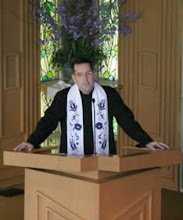
Reading from August 24 stewardship sermon
From the Rev. Victoria Weinstein
Maybe we could consider that no matter what great innovations we may think up, the Church still stands and always will stand for the eternal and the essential things which do not change all that much century to century—how to endure tragedy. How to be a force for the good. How to prepare for the inevitability of death. How to seek truth. How to serve on a committee with really irritating people.
I'm all for snazzy innovations where they're appropriate, and I like change. But I think that as we envision the 21st century church, it is all too easy to become unwittingly complicit with one of the greatest dehumanizing myths that drives our culture today. That myth is that we are, above all, consumers—and that, as consumers, we are best served when we are barraged by a dizzying variety of products, and that our purpose in life is to ch oose from among those products based on purely individualistic, ego-based preferences, and that we should consume or use or join these "products" only to the extent that they please us and meet our own personal needs.
When we buy into this mythology (pun intended)—and it happens without our realizing it—we begin to regard everything around us as a product to consume—everything becomes a shopping experience! We become consumers not only of material goods, but also of relationships, education, travel experiences, health care choices, and of course...religious communities.
The church of the 21st century must stand against this cultural sickness with all its might—especially, I might add—those churches that are located in the heart of middle-class, suburban America, to whom this mythology has been most relentlessly promoted, with the most spiritually toxic and morally paralyzing results.
So what do 21st century church seekers need from us? To begin with, they need not be treated as consumers of a product, an ideology or a social club, but welcomed as human beings who have their own unique stories and their own destinies. They need to be invited to join forces with a healthy community of people who are happily absorbed in the work of mutual ministry and who are devoutly committed to daily incarnating divine love in the world, everywhere in the world, and...who can abide in a=2 0mature and forbearing manner with real difference.
Today's seekers to our congregations need to give. They need not to be examined at the door to assure appropriate theological or political conformity, or greeted with smug assurances that they're smart and sophisticated enough to be "one of us," nor should they be pandered to if they come damaged by the narcissism and entitlement instilled in them by this culture. If they come because they heard that Unitarian Universalism is a hospital for the religiously wounded, we should not expect to find them ten years hence, directing traffic from their stretchers in the parish hall, still ranting about the abuses they suffered from religious traditions long since abandoned. We should provide them opportunities to learn, to understand, to reconcile, to develop a life-giving personal theology for themselves, and finally, to heal. We should not be afraid to tell them that this area of spiritual growth and reconciliation is not only encouraged, but that the church joyfully anticipates such healing for them.
Stewardship of the 21st century church is not about providing services and a superior product to consumers, it is about fostering worshipful hearts and reverent souls who love what the church represents so much that they begin to live their lives in accordance with its ideals.
In this vision of stewardship, churches are not afraid to have expectations of their=2 0members, among them:
That they will practice love and hospitality as their chief spiritual disciplines;
That they will minister to and let themselves be ministered unto;
That they will help when asked;
That they will pledge generously to the church (and that they will fulfill those pledges);
That they will pray for (or think good thoughts about) those who ask for their prayers;
That they will make themselves students of the religious and theological heritage of Unitarianism and Universalism;
That they will make a joyful noise on Sunday mornings even if they can’t carry a tune in a bucket;
That they will consider no question too stupid to ask in learning how to participate in the democratic process or in leadership;
That they will consider no congregational meeting too minor to attend; and that they will abide with all their hearts, all their minds, all their soul and all their strength by the covenant of the church.
I grew up and came of age in the Unitarian Universalism of the late 20th century, which was largely defined by negations and a sense of terminal and isolating uniqueness. I hope to walk with you into a 21st century Unitarian Universalism that is defined by affirmations, by a sense of fellowship with all people who seek meaning through religious community,=2 0and by a sense of high expectation and limitless possibility.
Maybe we could consider that no matter what great innovations we may think up, the Church still stands and always will stand for the eternal and the essential things which do not change all that much century to century—how to endure tragedy. How to be a force for the good. How to prepare for the inevitability of death. How to seek truth. How to serve on a committee with really irritating people.
I'm all for snazzy innovations where they're appropriate, and I like change. But I think that as we envision the 21st century church, it is all too easy to become unwittingly complicit with one of the greatest dehumanizing myths that drives our culture today. That myth is that we are, above all, consumers—and that, as consumers, we are best served when we are barraged by a dizzying variety of products, and that our purpose in life is to ch oose from among those products based on purely individualistic, ego-based preferences, and that we should consume or use or join these "products" only to the extent that they please us and meet our own personal needs.
When we buy into this mythology (pun intended)—and it happens without our realizing it—we begin to regard everything around us as a product to consume—everything becomes a shopping experience! We become consumers not only of material goods, but also of relationships, education, travel experiences, health care choices, and of course...religious communities.
The church of the 21st century must stand against this cultural sickness with all its might—especially, I might add—those churches that are located in the heart of middle-class, suburban America, to whom this mythology has been most relentlessly promoted, with the most spiritually toxic and morally paralyzing results.
So what do 21st century church seekers need from us? To begin with, they need not be treated as consumers of a product, an ideology or a social club, but welcomed as human beings who have their own unique stories and their own destinies. They need to be invited to join forces with a healthy community of people who are happily absorbed in the work of mutual ministry and who are devoutly committed to daily incarnating divine love in the world, everywhere in the world, and...who can abide in a=2 0mature and forbearing manner with real difference.
Today's seekers to our congregations need to give. They need not to be examined at the door to assure appropriate theological or political conformity, or greeted with smug assurances that they're smart and sophisticated enough to be "one of us," nor should they be pandered to if they come damaged by the narcissism and entitlement instilled in them by this culture. If they come because they heard that Unitarian Universalism is a hospital for the religiously wounded, we should not expect to find them ten years hence, directing traffic from their stretchers in the parish hall, still ranting about the abuses they suffered from religious traditions long since abandoned. We should provide them opportunities to learn, to understand, to reconcile, to develop a life-giving personal theology for themselves, and finally, to heal. We should not be afraid to tell them that this area of spiritual growth and reconciliation is not only encouraged, but that the church joyfully anticipates such healing for them.
Stewardship of the 21st century church is not about providing services and a superior product to consumers, it is about fostering worshipful hearts and reverent souls who love what the church represents so much that they begin to live their lives in accordance with its ideals.
In this vision of stewardship, churches are not afraid to have expectations of their=2 0members, among them:
That they will practice love and hospitality as their chief spiritual disciplines;
That they will minister to and let themselves be ministered unto;
That they will help when asked;
That they will pledge generously to the church (and that they will fulfill those pledges);
That they will pray for (or think good thoughts about) those who ask for their prayers;
That they will make themselves students of the religious and theological heritage of Unitarianism and Universalism;
That they will make a joyful noise on Sunday mornings even if they can’t carry a tune in a bucket;
That they will consider no question too stupid to ask in learning how to participate in the democratic process or in leadership;
That they will consider no congregational meeting too minor to attend; and that they will abide with all their hearts, all their minds, all their soul and all their strength by the covenant of the church.
I grew up and came of age in the Unitarian Universalism of the late 20th century, which was largely defined by negations and a sense of terminal and isolating uniqueness. I hope to walk with you into a 21st century Unitarian Universalism that is defined by affirmations, by a sense of fellowship with all people who seek meaning through religious community,=2 0and by a sense of high expectation and limitless possibility.
Strategic Plan
Find the Unitarian Church, Davenport strategic plan here
http://qcuu.org/Communications/special_reports/STRATEGIC%20PLAN%20%20_FINAL_%2012-14-2007.pdf
http://qcuu.org/Communications/special_reports/STRATEGIC%20PLAN%20%20_FINAL_%2012-14-2007.pdf
Tricia's Results Email
Notes from group conversations
Urgent Questions – general concerns or specific questions brought to our meeting by participants. We dealt with all of these topics, at least partially, during the day. These are good questions to keep in mind, however, because if they are of interest/concern to you, they are probably of interest to others in the church as well.
Recruitment of leaders and volunteers for Annual Budget Drive (ABD)
Why reinvent the process? - evaluate what’s working, what’s not
How to know the plan for 08-09: vision, goals, program priorities, and thus $ goals
Are we doing okay, financially? history, staffing
How to state the church’s financial needs so that people will step up
Congregational debt: is it good or bad?
Best roles, for: Board, ABD Committee, Minister
Things to find out: What is (or might be) necessary for a successful Annual Budget Drive, that this group doesn’t yet know ( and who might be asked to supply answers)
2008-2009 Budget Goals – in order to “make the case” for budget and financial commitment goals, you will need decision, clarity, and visible support from the Board
Identify, and get ready to tell financial success stories, about (to list a few):
- staff growth, fair compensation, just and generous benefits, including professional development
- 2 successful capital campaigns in last 12+ years, with strong congregational support
- recent landscaping campaign
ABD Brochure: what images, themes capture our imagination
Observation: The church is in the midst of a major cultural transformation around money: from not taking a collection until about 5 years ago, to budget growth of 26% and pledge growth of 35% in the last three years
2008-2009 Budget Priorities (proposed)
Group’s responses to the question “What might make you (and others) consider making or increasing the amount of your financial pledge in the coming year?” You should consider making this list into a proposal for the Board’s consideration at their earliest moment.
The first 4 items below were chosen as most compelling and important by the group. Other good ideas are listed below.
**clear, identified outcomes that could result from budget increase:
Create Reserve Fund
Debt reduction plan
Publicity / Visibility – re: growth (young families), 50th anniversary of building,
website, other web-related improvements
Sanctuary light and sound improvements
…also: vibrant, growing children’s RE program, with stable professional leadership
sabbatical funding
2010 hosting of Prairie Star District annual meeting
experiment with 2 services
more hymnals
social justice coordination
consistent(ly engaging) message
Sustaining Funds: roof, parking lot; piano maintenance
Possible ABD THEMES: “Facilities – Growth (Families, Future) – Fiscal Stability”
Urgent Questions – general concerns or specific questions brought to our meeting by participants. We dealt with all of these topics, at least partially, during the day. These are good questions to keep in mind, however, because if they are of interest/concern to you, they are probably of interest to others in the church as well.
Recruitment of leaders and volunteers for Annual Budget Drive (ABD)
Why reinvent the process? - evaluate what’s working, what’s not
How to know the plan for 08-09: vision, goals, program priorities, and thus $ goals
Are we doing okay, financially? history, staffing
How to state the church’s financial needs so that people will step up
Congregational debt: is it good or bad?
Best roles, for: Board, ABD Committee, Minister
Things to find out: What is (or might be) necessary for a successful Annual Budget Drive, that this group doesn’t yet know ( and who might be asked to supply answers)
2008-2009 Budget Goals – in order to “make the case” for budget and financial commitment goals, you will need decision, clarity, and visible support from the Board
Identify, and get ready to tell financial success stories, about (to list a few):
- staff growth, fair compensation, just and generous benefits, including professional development
- 2 successful capital campaigns in last 12+ years, with strong congregational support
- recent landscaping campaign
ABD Brochure: what images, themes capture our imagination
Observation: The church is in the midst of a major cultural transformation around money: from not taking a collection until about 5 years ago, to budget growth of 26% and pledge growth of 35% in the last three years
2008-2009 Budget Priorities (proposed)
Group’s responses to the question “What might make you (and others) consider making or increasing the amount of your financial pledge in the coming year?” You should consider making this list into a proposal for the Board’s consideration at their earliest moment.
The first 4 items below were chosen as most compelling and important by the group. Other good ideas are listed below.
**clear, identified outcomes that could result from budget increase:
Create Reserve Fund
Debt reduction plan
Publicity / Visibility – re: growth (young families), 50th anniversary of building,
website, other web-related improvements
Sanctuary light and sound improvements
…also: vibrant, growing children’s RE program, with stable professional leadership
sabbatical funding
2010 hosting of Prairie Star District annual meeting
experiment with 2 services
more hymnals
social justice coordination
consistent(ly engaging) message
Sustaining Funds: roof, parking lot; piano maintenance
Possible ABD THEMES: “Facilities – Growth (Families, Future) – Fiscal Stability”
Subscribe to:
Posts (Atom)